

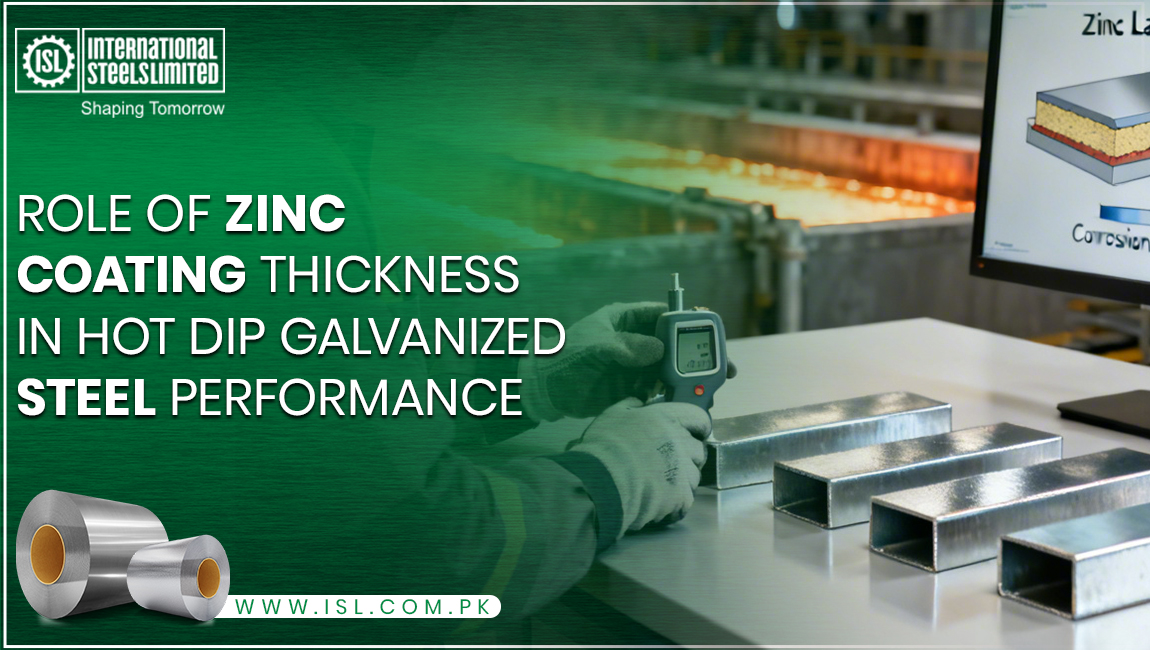
Role of Zinc Coating Thickness in Hot Dip Galvanized Steel Performance
The longevity of steel when it comes to structural engineering and industrial manufacturing is not merely a matter of material selection, but of surface science. Corrosion remains one of the most significant challenges to infrastructure integrity, which costs global economies billions annually in maintenance and premature replacement.
While various protective methods exist, Hot Dip Galvanizing stands as the gold standard for long-term durability, providing a unique combination of barrier protection and electrochemical defense that other coatings struggle to match.
Understanding the nuances of zinc coating thickness is essential for professionals tasked with designing for “life-to-first-maintenance.” It is a common misconception that all galvanization is created equal; in reality, the service life of a component is a direct variable of the environment it inhabits, the specific micron count of its zinc-iron alloy layer, and the chemical composition of the base steel.
For engineers and architects, mastering these variables is the difference between a structure that lasts twenty years and one that remains pristine for a century.
At International Steels Limited, we believe that technical transparency is the foundation of industrial progress. By examining the metallurgical bond and the predictable corrosion rates of zinc, we can better equip the professional market to make data-driven decisions.
Fundamentals of Hot Dip Galvanization
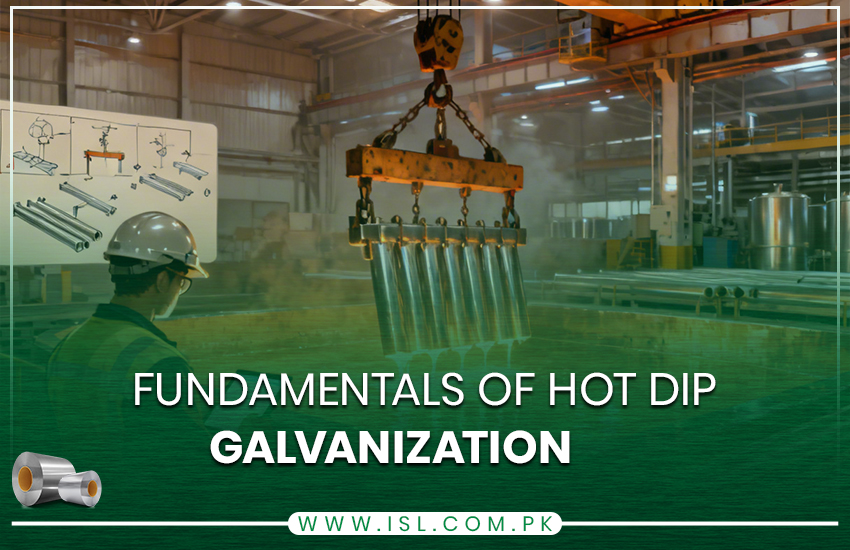
Hot dip galvanizing (HDG) is a reliable process of coating iron or steel with a protective, metallurgically bonded zinc layer to prevent corrosion. As a result, the material lasts decades without maintenance. The process involves three main stages:
1. Surface Preparation
The most critical step is where steel is immersed in a series of cleaning solutions:
- Pickling: Acid bath to remove rust and mill scale.
- Degreasing/Cleaning: Removal of oil, grease, dirt, and paint.
- Fluxing: Application of zinc ammonium chloride to remove oxides and prevent further oxidation before galvanizing.
2. Galvanizing
The cleaned, dried steel is immersed in a molten zinc bath heated to roughly (449-454 °C). A metallurgical reaction occurs between the zinc and the steel’s iron, forming a series of zinc-iron alloy layers bonded to the surface.
Here, the Sandelin Effect comes into play: the silicon and phosphorus content in the steel dictates the coating’s growth. Steel with silicon between 0.05% and 0.15% can react too rapidly, creating excessively thick, brittle coatings.
3. Cooling & Inspection
The material is cooled in air or water. Inspectors verify the coating’s thickness, surface appearance, and uniformity to ensure it meets quality standards. While batch galvanizing produces thick coatings for heavy structures, continuous galvanizing (standard for steel coils) provides thinner, highly ductile layers optimized for formability and shaping.
Hot-dip galvanizing produces a protective, metallurgically bonded coating on steel by immersing it in molten zinc (~450 °C). This forms an inner series of distinct zinc-iron alloy layers (ζ, δ, γ) closest to the steel, topped by a relatively pure and ductile outer layer of pure zinc (η). These layers provide superior abrasion resistance and long-term corrosion protection.
Metallurgical bonding and surface coatings are both used to modify the surface properties of materials. But they differ fundamentally in their bonding mechanism, adhesion strengths, and the nature of the interface. Metallurgical bonding creates an atomic-level fusion or diffusion zone. By contrast, surface coatings (which often rely on mechanical interlocking) are layers applied to the surface, typically with a distinct boundary.
How Zinc Coating Thickness Affects Corrosion Protection
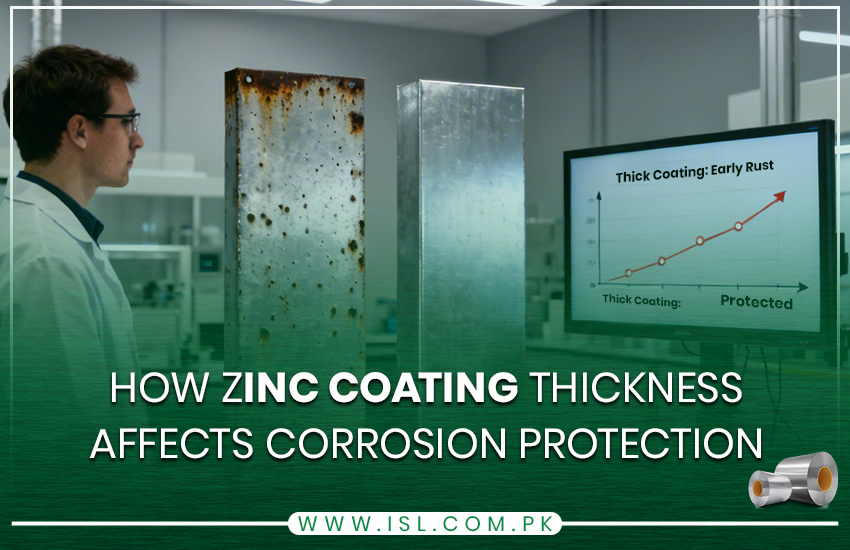
Zinc coating thickness is directly proportional to the lifespan of corrosion protection for steel. It acts as a linear barrier where doubling the thickness generally doubles the service life. Thicker zinc layers provide longer-lasting sacrificial protection (cathodic protection) against moisture, salt, and industrial pollutants. It significantly reduces maintenance costs.
Barrier Protection and Sacrificial Action
Barrier protection (e.g., paint, plastic) physically separates metal from oxygen and moisture to prevent corrosion. Sacrificial action (e.g., galvanizing) uses a more reactive metal, like zinc, which corrodes in preference to the substrate, providing protection even if the coating is damaged. Over time, zinc forms a “patina” (zinc carbonate) that acts as an additional, very stable barrier. This protection is most effective in environments with a pH between 6 and 12.
The real strength of zinc coatings lies in their synergy:
- The barrier slows environmental attack
- Sacrificial action protects inevitable defects
- Zinc corrosion products reinforce the sealing over time
Corrosion Rate vs Coating Thickness
The lifespan of a galvanized coating is largely linear. If you double the thickness of the zinc, you generally double the time until the first signs of rust appear.
For procurement, note that Coating Mass (g/m²) and Thickness (μm) are linked: approximately 7.14 g/m² of zinc equals 1μm of thickness per side.
Unlike many other coatings, zinc corrodes at a very predictable and slow rate in most environments. This is why engineers can estimate the “service life” of a part based on the microns (μm) of zinc applied.
| Environment | Typical Corrosion Rate of Zinc |
|---|---|
| Rural (Clean Air) | Very Low (< 0.5 µm / year) |
| Industrial (Polluted) | Moderate (2-5 µm / year) |
| Marine (Salty/Coastal) | High (5-10 µm / year) |
Service Life Calculation
To calculate how long a coating will last, you use a simple logic:
“Life to First Maintenance = Total Zinc Thickness/Annual Corrosion Rate”
For example, a standard hot-dip galvanized coating of 85μm in a typical urban environment (corroding at 1.5μm per year) would provide over 50 years of protection before the steel requires maintenance.
Key Takeaway:
“While a thin zinc plating (like electro-galvanizing) is sufficient for indoor hardware, heavy-duty outdoor structures require the much thicker layers provided by hot-dip galvanizing to withstand the elements over decades.”
Zinc Coating Thickness and Service Life Expectations
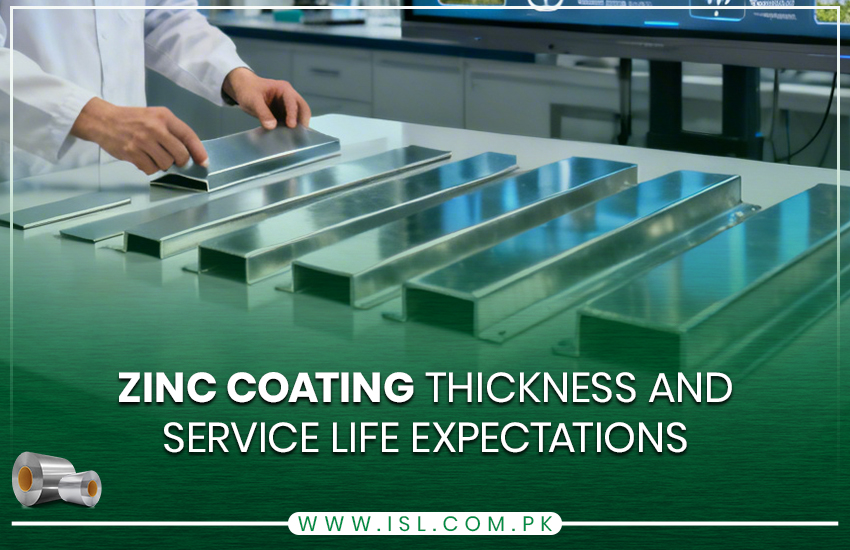
Different application methods result in different thicknesses, which directly dictate how long the steel will last before rusting. The “Service Life” is not a fixed number; it depends entirely on the corrosivity of the environment. High humidity, salt, and industrial pollutants accelerate the consumption of the zinc layer.
Design life assumptions are calculated by dividing the total zinc coating thickness by the environment’s specific annual corrosion rate (ISO 12944) to ensure the “time to first maintenance” exceeds the project’s required operational lifespan.
| Coating Class / Method | Approx. Thickness (µm) | Service Life: Rural (C2) | Service Life: Urban (C3) | Service Life: Marine (C5) |
|---|---|---|---|---|
| Electro-galvanized | 5-12 µm | 5-10 years | 2-5 years | <1 year |
| Continuous (Pre-galv) | 20-42 µm | 20-40 years | 10-20 years | 2-5 years |
| Thermal Spray (Zinc) | 100-150 µm | 100+ years | 50-70 years | 15-25 years |
| Hot-Dip Galvanized | 85-100 µm | 80+ years | 40-60 years | 10-20 years |
| Zinc-Rich Paint | 50-75 µm | 30-50 years | 15-25 years | 5-10 years |
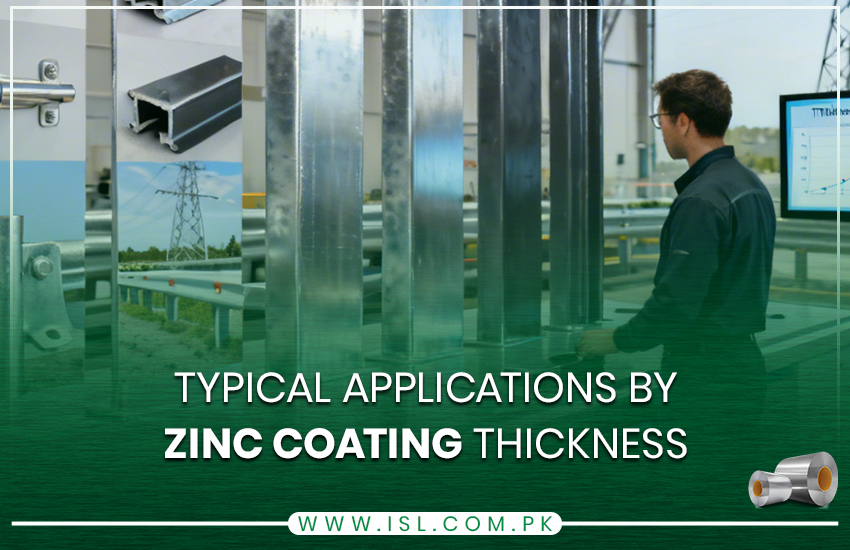
Typical Applications by Zinc Coating Thickness
The application of zinc coatings is determined by the specific “service life” required for the environment. Matching the thickness to the exposure level ensures the structure remains safe and functional without premature maintenance.
1. Light Industrial and Indoor Applications
In these environments, the primary concern is often aesthetic or protection against occasional condensation. Thick coatings are usually unnecessary.
- Appliances: Computer casings, washing machine panels, and HVAC ducting
- Automotive: Interior body panels and small under-hood components
- Retail: Shopping carts and display shelving
2. Structural and Outdoor Infrastructure
These projects require a “Life to First Maintenance” of 50 to 100 years. The coating must be thick enough to withstand rain, UV exposure, and moderate urban pollution.
- Transport: Train bogies, highway guardrails, bridge girders, and sign gantries
- Energy: Electrical transmission towers and solar panel racking systems
- Construction: C-Channels, C & Z Purlins, profiles for roofing and cladding, bridges, building facades
- Agriculture: Fencing, gates, and grain silos
3. Coastal and High-Corrosion Environments
Salt spray and heavy industrial chemicals create an aggressive environment (C5/CX). That is where standard zinc layers can be consumed rapidly.
- Marine: Pier pilings, offshore oil platforms, and dock hardware
- Industrial: Chemical processing plants and fertilizer storage facilities
- Coastal Infrastructure: Bridges within 1 km of the ocean
- Mining: Underground support structures and heavy machinery, which are exposed to acidic runoff
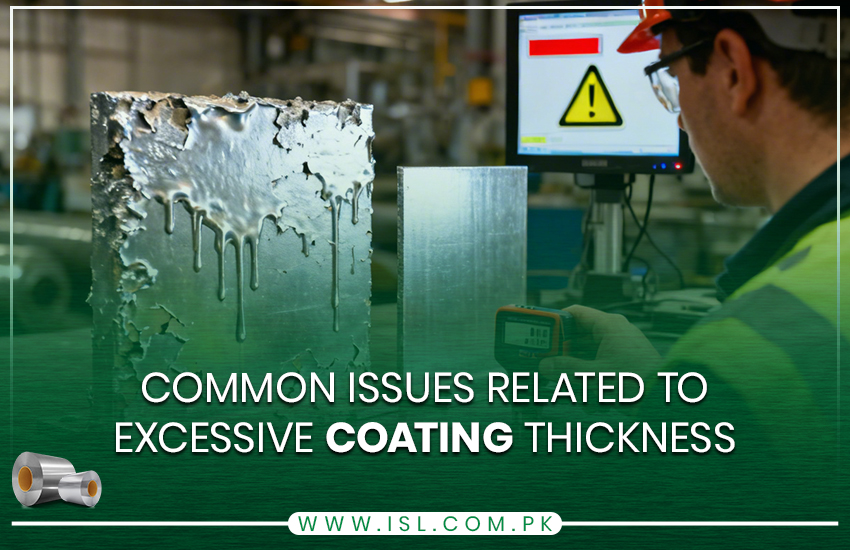
Common Issues Related to Excessive Coating Thickness
While thicker zinc coatings generally enhance corrosion protection, excessively thick or uneven coatings (often caused by Sandelin-grade steel chemistry) can create practical problems. Very thick coatings may adhere poorly, crack, or flake during forming or fabrication, reducing protection rather than improving it. In addition, uneven deposition can leave areas over- or under-coated, leading to weak points susceptible to corrosion.
Key issues:
- Premature corrosion due to insufficient coating in under-coated areas, despite overall thickness
- Formability challenges, such as cracking, flaking, or difficulty bending and shaping steel with excessive zinc
- Inconsistent coating distribution across the coil width, causing variable protection and potential weak spots

Partner with International Steels Limited (ISL) for Your Next Project
As a leader in flat steel manufacturing, International Steels Limited is committed to delivering products that meet the highest international standards of quality and durability, including JIS G3302, ASTM A653, and EN 10346.
Whether you are designing for high-salinity coastal environments or heavy-duty industrial infrastructure, our team provides the technical expertise, transparency, and high-grade galvanized steel required to ensure your structures stand the test of time.
Frequently Asked Questions
How to calculate zinc coating thickness?
For measuring the zinc coating thickness of hot-dip galvanized steel, there are two methods that you can utilize;
- A magnetic thickness gauge
- Optical microscopy
A magnetic thickness gauge is the simplest and most non-destructive way. On the other hand, optical microscopy is only used to resolve measurement disputes as it is a destructive test.
What is the coating thickness?
Coating thickness is an important variable and arguably the most critical factor in determining the lifespan and performance of hot-dip galvanized (HDG) steel. It plays a role in product quality, process control, and cost control.
Does hot-dip galvanizing add thickness?
Yes. Because the part is submerged in molten zinc, HDG creates a much thicker, more durable coating than standard zinc plating. Typically, it adds between 45 µm and 85 µm (approx. 1.8 to 3.4 mils) of thickness per side. While this provides superior corrosion protection, it is important to account for this added material in designs with extremely tight tolerances or threaded connections.
What are the standards for zinc coating?
International standards for zinc coating are primarily categorized by the method of application (Batch Hot-Dip, Continuous/Pre-galvanized, or Electro-galvanized) and the type of product (Steel plates, pipes, or fasteners). For continuous galvanizing (common in steel coils), the industry benchmarks are JIS G3302, ASTM A653/A653M, EN 10346 (Europe), and ISO 4998 (International).
References
American Galvanizers Association. (2014). Estimating the life of hot-dip galvanized coatings. https://galvanizeit.org/knowledgebase/article/estimating-the-life-of-hot-dip-galvanized-coatings
American Galvanizers Association. (n.d.). How long does HDG last? https://galvanizeit.org/hot-dip-galvanizing/how-long-does-hdg-last
American Galvanizers Association. (2011). Reasons for different appearances (Sandelin Effect). https://galvanizeit.org/knowledgebase/article/reasons-for-different-appearances
American Galvanizers Association. (2016). Evaluating steel chemistry prior to galvanizing. https://galvanizeit.org/knowledgebase/article/evaluating-steel-chemistry-prior-to-galvanizing
American Galvanizers Association. (1998). Lifetime vs. coating thickness. https://galvanizeit.org/knowledgebase/article/lifetime-vs-coating-thickness
American Galvanizers Association. (n.d.). Hot-dip galvanized steel vs. zinc-rich paint. https://galvanizeit.org/uploads/publications/Galvanized_Steel_vs_Zinc_Rich_Paint.pdf
Liu, Q., et al. (2024). Hot-dip galvanizing process and the influence of metallic elements… Journal of Composites Science. https://www.mdpi.com/2504-477X/8/5/160
Galvanizers Association of Australia. (2025). Guide to the durability of hot-dip galvanized steel. https://www.galvanizing.org.nz/docs/GAA_GANZ_Guide_to_Durability_of_HDG_1.pdf
FM S.p.A. (n.d.). Galvanizing thickness: Standards, dimensions, and service life. https://www.fmspa.com/en-gm/blog/galvanizing-thickness-standards-dimensions-and-service-life
Galvanizers Association of Australia. (n.d.). Predicting the life of galvanised coatings. https://www.steel.org.au/getattachment/f7202155-da5f-4e00-b2b2-39e465aaadea/Predicting-the-life-of-galvanised-coatings_INGALSM3.pdf
Nordic Galvanizers. (2020). Hot dip galvanizing and corrosion categories. https://nordicgalvanizers.com/wp-content/uploads/2020/10/Corrcat-rev-5-3.pdf
MWalloys. (2025). Galvanized steel vs zinc plated: differences, standards, lifespan.
https://www.mwalloys.com/galvanized-steel-vs-zinc-plated-differences-standards-lifespan/