

Flat Steel in Infrastructure Projects: Structural, Roofing, and Industrial Uses
Building a city’s skyline or an industrial hub requires materials that can carry the weight for decades. At International Steels Limited, we understand that for the engineers and architects shaping our world, flat steel is the essential framework of reliability. In large-scale infrastructure, the choice of material determines not only the initial success of a project but its long-term resilience and maintenance lifecycle.
When we talk about flat steel, whether it’s hot rolled, cold rolled, or galvanized, we are talking about the “muscle and skin” of modern construction. From the sprawling roofs of transit terminals to the intricate ductwork of power plants, the versatility of these products allows for a level of design precision that traditional materials simply cannot match. This post takes a closer look at the technical performance and mechanical requirements of flat steel within the professional infrastructure sector.
As we move toward a future of sustainable and high-efficiency construction, the role of high-quality flat steel continues to evolve. From meeting international compliance standards to contributing to “green” building certifications, the technical nuances of steel production are more relevant than ever. This blog explores the essential applications of flat steel in infrastructure, focusing on the mechanical requirements and environmental considerations that drive modern engineering decisions.
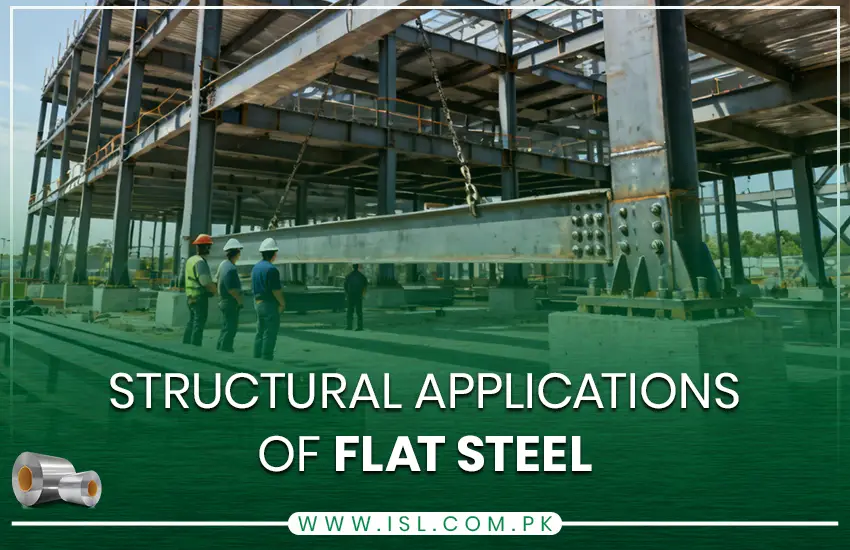
Structural Applications of Flat Steel
In structural engineering, the shift toward flat steel is driven by the need for precision, speed, and versatility. As the largest flat steel manufacturer in Pakistan, ISL provides the industrial scale required for national infrastructure, specializing in the essential components that support, partition, and enclose modern developments.
While primary structural frames (like heavy-duty hot-rolled I-beams and columns) provide the core skeleton, flat steel products allow for the creation of high-precision secondary systems. This flexibility is what enables the vast, open-span interiors and intricate partitioning seen in modern logistics centers and commercial hubs.
Flat Steel in Structural Profiles and Partitioning
The process of transforming flat steel into functional profiles involves high-precision forming. ISL utilizes advanced German technology (SMS Siemag) in its Cold Rolling Mill to ensure the highest level of surface finish and thickness accuracy.
ISL’s flat steel product range is specifically engineered for the following construction applications:
- Light Gauge Steel (LGS) Structures: Flat steel is formed into C-channels and other precise profiles to create lightweight, durable frameworks for residential and commercial buildings.
- Secondary Framing for Pre-Engineered Buildings (PEBs): Flat steel is the industry standard for purlins (roof supports) and wall girts. These components distribute environmental loads from the cladding to the primary high-strength steel beams, optimizing the overall structural weight.
- Wall Partitioning: Providing the smooth, consistent internal framework required for flexible and accurate interior layouts.
- Aesthetic Infrastructure & Beautification: Beyond standard profiles, weather-resistant steel (Corten steel) is increasingly utilized in infrastructure for bridges and outer building cladding. Its unique oxidation process creates a protective, rust-like patina that offers long-term durability and a modern industrial aesthetic without the need for additional painting.
By utilizing these flat steel solutions, designers can optimize material usage—placing strength in the secondary support systems exactly where it is needed. This reduces the overall dead load on the building’s foundation and streamlines the logistics of transporting materials to remote infrastructure sites.
- Design Flexibility: Enables the creation of precise non-standard geometries and secondary profiles.
- Material Optimization: High-strength-to-weight-ratio Cold-Formed Steel (CFS) sections significantly reduce foundation requirements.
- Consistency: ISL flat steel ensures uniform thickness and mechanical integrity across every meter of the profile, essential for secure structural connections.
Mechanical Properties Required for Structural Use
The performance of flat steel in structural applications is governed by its yield strength, tensile strength, and ductility. ISL products conform to stringent international quality standards (such as JIS, ASTM, and EN grades), ensuring the right material selection for the right application while maintaining consistent quality, reliability, and performance. To guarantee this reliability, every batch of steel is verified by our in-house, state-of-the-art testing laboratories, ensuring absolute consistency across every meter produced.
A high yield strength is critical to ensure the material returns to its original shape after loading, preventing permanent deformation. Ductility and weldability are equally vital. The ability of the steel to undergo plastic deformation without fracturing is a key safety feature, particularly in “fail-safe” design philosophies. Also, the chemical composition, specifically the carbon equivalent, must be carefully controlled to ensure high-quality welds that maintain the integrity of the structural joints.
- Yield Strength (Fy): Vital for determining the limit state of the structural members.
- Elongation: A measure of ductility, ensuring the material can absorb energy during unforeseen loading events.
- Surface Finish: Optimized for the proper adhesion of fireproofing or anti-corrosion coatings.
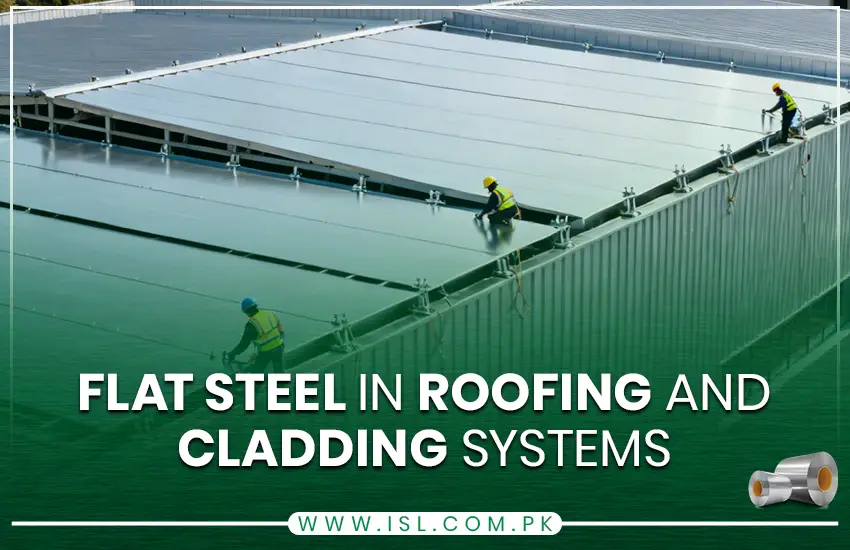
Flat Steel in Roofing and Cladding Systems
If structural steel is the skeleton of a building, then roofing and cladding are its armor. In infrastructure, this armor is expected to endure for 30 to 50 years under constant exposure to UV radiation, heavy rain, and industrial pollutants. Flat steel is the preferred medium for these systems because it offers a rare combination of lightweight handling and heavy-duty environmental protection.
To ensure these materials reach the site ready for rapid deployment, the ISL Service Center provides precision slitting and custom cut-to-length services. This allows engineers to receive material tailored to exact project specifications, enabling immediate installation and reducing on-site fabrication time.
Galvanized and Color Coated Steel for Roofing
For roofing, galvanized steel provides critical sacrificial protection through a zinc coating (typically specified at levels like Z275 for industrial use). In more aggressive environments, such as coastal regions or chemical zones, color-coated steel adds a secondary barrier of high-grade polymers. This multi-layered approach protects the zinc layer from oxidation. It ensures the building remains airtight and structurally sound throughout its lifecycle.
The technical performance of these systems also depends on the “stiffness” and coating adhesion of the steel. High-tensile base metal allows for the production of roofing profiles that can support maintenance traffic and environmental loads even at thinner gauges.
- Atmospheric Resistance: Zinc and alloy coatings provide long-term protection against rust in varying humidity levels.
- Reflectivity: Modern pre-painted coatings can be engineered with high Solar Reflectance Index (SRI) values to keep internal temperatures manageable.
- Custom Profiles: Flat steel can be roll-formed into high-rib or standing-seam profiles to maximize water runoff and wind-uplift resistance.
Environmental Performance in Roofing Applications
Modern infrastructure is increasingly judged by its environmental footprint and its contribution to “Green Building” standards like LEED. Flat steel is inherently sustainable because it is 100% recyclable without any loss in mechanical properties. At ISL, we take this responsibility further by actively moving toward becoming a carbon-neutral organization, aligning our production processes with global environmental goals.
From a technical standpoint, the choice of cladding also impacts the energy efficiency of the building. The appropriate selection can potentially mitigate the Urban Heat Island effect and significantly reduce cooling loads for large-scale utility buildings.
Beyond energy, the durability of the material itself is a form of sustainability. A roofing system that doesn’t need to be replaced every decade reduces material waste and maintenance disruptions. High-performance coatings, such as PVDF, ensure that the steel surface does not chalk or fade under intense UV exposure, preserving both the aesthetic value and the structural integrity of the thin-gauge metal.
- Recyclability: Contribution to a circular economy, as steel can be repurposed at the end of a building’s life.
- Thermal Regulation: Use of infrared-reflective pigments to lower the surface temperature of the roof.
- Acoustic Management: Perforated flat steel panels are often integrated into cladding to manage noise levels in high-traffic transit hubs.

Flat Steel in Large-Scale Infrastructure Projects
Beyond the walls and roofs, flat steel works hard inside the facility to keep everything running.
- Enclosures and Ducts: Galvanized steel is used to make airtight air conditioning ducts and secure boxes for electrical equipment. Its smooth surface and exact thickness make it perfect for these precision jobs.
- Cable Trays and Walkways: In power plants, flat steel is used for the “paths” that hold thousands of cables and the walkways where workers walk. It is strong, fire-resistant, and can be galvanized to prevent rust.
- Factory Infrastructure: Heavy flat steel is used to build large tanks, chimneys, and equipment housings. It can be bent into large shapes while remaining incredibly strong.
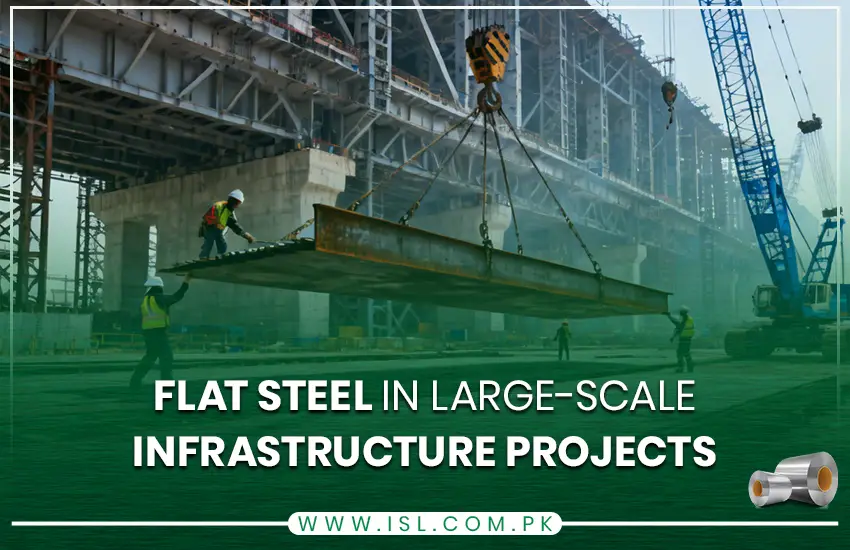
Flat Steel in Large-Scale Infrastructure Projects
Large projects need materials that can be delivered quickly and perform perfectly every time. At ISL, we provide the scale and reliability required to meet these rigorous demands across multiple sectors.
Transportation
In airports, bus terminals, and railway stations, flat steel provides both the beauty of the design and the strength of the frame. Beyond architecture, flat steel is essential for manufacturing shipping containers and train carriages. For infrastructure like bridges and outer building cladding, the use of Corten steel is preferred, as its natural protective layer offers both high-strength performance and an iconic, industrial aesthetic for urban beautification.
Logistics Centers
Huge warehouses for e-commerce use thousands of tons of flat steel for high-density shelving, massive roofs, and cladding. Because our steel is easy to work with and precisely cut at the ISL Service Center, these buildings can be finished and enclosed very quickly, reducing time-to-market for operators.
Power and Energy
From solar panel frames to the enclosures that hold electrical transformers, galvanized flat steel is used because it resists rust even when left outside in the rain for decades. This ensures that critical energy infrastructure remains functional with minimal maintenance in harsh outdoor environments.
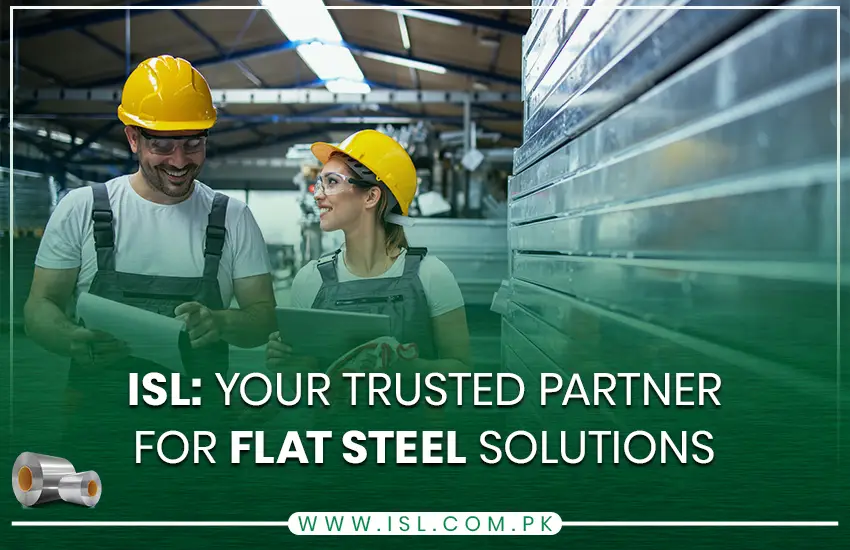
ISL: Your Trusted Partner for Flat Steel Solutions
Success in large-scale infrastructure requires a partnership with a material provider that understands the technical demands of the professional market. International Steels Limited has established a global footprint, exporting to over 30 countries across 6 continents. This international presence is a testament to the fact that our quality is not just locally leading but globally competitive.
We are committed to transparency and efficiency through the ISL Customer Portal, a dedicated digital tool that allows our clients to track their orders and access detailed technical specifications in real-time. This level of digital integration is a service not offered by most local competitors, ensuring you have the data you need exactly when you need it.
If you are currently drafting a specification or troubleshooting a material challenge, let’s have a technical chat. We love getting into the weeds of metallurgy and helping our partners optimize their material usage for maximum structural integrity and cost-efficiency.
Frequently Asked Questions
What is steel used for in infrastructure?
A fundamental component in infrastructure, steel is utilized for its high strength-to-weight ratio, durability, and versatility in constructing bridges, roads, railways, and buildings. Key applications include:
- Light Gauge Steel Structures
- Secondary-framing for Pre-Engineered buildings
- Wall partitioning
- Roofing & Cladding
- Ducting & cable trays
What are the 4 types of steel structures?
- 1. Portal rigid frames
- 2. Frame structures
- 3. Truss structures
- 4. Grid structures
Which ISL steel grade is best for my project?
The “best” grade depends on your specific environment and mechanical needs:
- Cold Rolled (CR): Best for applications requiring high precision, smooth surfaces, and consistent thickness (e.g., electrical enclosures).
- Galvanized (GI): Ideal for structural elements or roofing where long-term corrosion resistance is mandatory.
- Color Coated (PPGI): Recommended for roofing and cladding in areas requiring both aesthetic appeal and enhanced environmental protection.
References
Corten.com. (n.d.). What is Corten steel? https://www.corten.com/what-is-corten-steel/
Mainline Metals. (2025). A guide to flat rolled steel: Products, uses, & more. https://mainlinemetals.com/a-guide-to-flat-rolled-steel-products/
MD Metals. (2024). Top 10 applications of flat bar in industrial settings. https://www.mdmetals.com/2024/12/10/top-10-applications-of-flat-bar-in-industrial-settings/
PromiSteel. (2025). A simple guide to galvanized steel grades & zinc coatings. https://www.promisteel.com/info/a-simple-guide-to-galvanized-steel-grades-zi-103097836.html
World Steel Association & related studies. Steel is 100% recyclable with no loss of properties. AZoBuild. (2024). Recycled steel and its role in sustainable construction. https://www.azobuild.com/article.aspx?ArticleID=8693
Asia Metal Ltd. (n.d.). Z275 zinc coating standard explained: Thickness, weight, testing. https://www.asiametalltd.com/news/Z275-zinc-coating-standard-explained:-thickness,-weight,-testing.html