

Cold Rolled Steel Explained: Tolerances, Strength, and Surface Finishes
In modern, high-stakes manufacturing, the choice of substrate, along with the precision of raw materials, dictates the quality and viability of the final product. High-quality Cold Rolled Steel (commonly known as Cold Rolled Coil “CRC”) serves as the backbone for the automotive and construction sectors. Its market is expected to grow at a CAGR of 3.4-6.2% through 2033.
International Steels Limited utilizes state-of-the-art cold-reduction technology to deliver steel that meets rigorous global standards. We ensure that downstream processes from high-speed stamping to automated robotic welding function at peak efficiency.
While hot-rolled steel serves as the foundational “workhorse” for structural projects, the cold rolling process elevates the material through localized strain hardening and controlled recrystallization. By processing steel at room temperature, we are able to “lock in” specific mechanical properties and surface qualities that are impossible to achieve through hot rolling alone, so we can provide our partners a material that is not only thinner and stronger but also exceptionally consistent, helping them reduce waste and improve production efficiency.
For the technical professional, the value of CRC lies in its predictable behavior under stress. By manipulating the crystalline structure of the steel through controlled deformation and thermal cycles, ISL produces a material that offers superior gauge consistency and enhanced mechanical properties. This technical overview examines the specific tolerances and metallurgical characteristics that define ISL’s cold-rolled portfolio.
What Is Cold Rolled Steel?
To understand cold rolled steel, it helps to look at how it begins. Most steel starts as “Hot Rolled,” processed at glowing-white temperatures above 1,100 C°. The distinction between hot and cold rolled steel is defined by the recrystallization temperature. While hot rolling is great for structural beams, it leaves behind a rough, oxidized surface called “scale.”
Cold rolled steel takes that raw material and refines it. By processing the steel at room/ambient temperature, the shrinking and warping that happens as hot metal cools is avoided, allowing the “tight” dimensions that modern machinery requires.
The transition from a raw hot-rolled coil to a high-precision cold-rolled sheet involves four primary stages:
- 1. Pickling
- 2. Cold reduction
- 3. Annealing
- 4. Temper rolling/Skin Passing
The production flow begins with Hydrochloric Acid (HCl) Pickling, which chemically removes oxides to ensure a chemically clean surface for reduction. The Cold Reduction Mill (CRM) then applies massive compressive forces by passing through a series of rollers. It elongates the metal grains and increases the dislocation density within the crystal lattice.
Because this process “work-hardens” the steel, making it brittle, the steel undergoes Batch or Continuous Annealing to restore the required “Forming Quality,” followed by a Skin Pass (Temper) Mill to finalize the mechanical properties and eliminate the “yield point phenomenon,” preventing Lüders lines during fabrication, achieving the desired flatness and surface texture.
Cold Rolling Process and Its Impact on Material Properties
The cold rolling process is a strategic intervention in the metal’s microstructure, designed to balance tensile strength with elongation.
Cold Reduction and Thickness Control
During cold reduction, the thickness is typically reduced by 30% to 90%. This intensive strain-hardening significantly increases the Hardness (Rockwell B scale) and Yield Strength. For manufacturers, this means the material can often be used in thinner gauges than hot-rolled alternatives without sacrificing structural load-bearing capacity.
Modern mills employ X-ray Gauge Monitoring and Automatic Gauge Control (AGC) to monitor thickness in real-time. These systems utilize closed-loop feedback to manage roll gap hydraulic pressure. This minimizes “off-gauge” material, ensuring that the strip remains within a narrow deviation band (often ±0.02mm or tighter). It is critical for protecting expensive carbide dies in high-speed stamping.
Annealing and Microstructural Control
Annealing is the thermal “recrystallization” phase where the heating rate, soak time, and cooling rate are controlled in a 25% – 30% Hydrogen atmosphere. This prevents oxidation and ensures a bright, clean surface while allowing the elongated grains to reform into equiaxed grains.
By adjusting the annealing cycle, manufacturers can produce specific grades like SPCG (Extra Deep Drawing Quality). This involves achieving a high r-value (Lankford coefficient) and n-value (Strain Hardening Exponent). They are the technical benchmarks for steel that must undergo extreme stretching without localized necking or failure.
Dimensional Tolerances in Cold Rolled Steel
Precision is the defining characteristic of cold rolled steel. Because the material is processed at room temperature, it avoids the unpredictable shrinkage seen in hot-rolled products. This allows manufacturers to meet incredibly “tight” requirements that are essential for high-speed automated manufacturing.
Here is a breakdown of the typical dimensional tolerances you can expect with cold rolled steel.
Thickness Tolerances
Thickness consistency is measured in thousandths of an inch. Hot rolled steel might have significant variations. However, cold rolled steel typically maintains:
- Standard Precision: ±0.001 to ±0.002 inches, depending on the gauge.
- Application: Vital for progressive die stamping, where consistent thickness prevents tool damage.
- Monitoring: Managed via real-time X-ray or isotope sensors during the rolling process.
| Nominal Thickness Range | Typical Tolerance (Standard) |
|---|---|
| 0.25 mm ≤ 0.40 mm | +/- 0.040 mm |
| 0.40 mm ≤ 0.60 mm | +/- 0.05 mm |
| 0.60 mm ≤ 0.80 mm | +/- 0.06 mm |
Width, Length, and Flatness Tolerances
Beyond thickness, the physical “footprint” and flatness of the sheet are strictly controlled to ensure compatibility with CNC and laser equipment.
| Metric | Tolerance Benefit | Common Standard |
|---|---|---|
| Width | Allows for immediate use in assembly without trimming. | ±0.005 to ±0.125 (Slit / Trim Edge) |
| Flatness | Prevents “oil canning” or bowing during laser cutting. | JIS G3141 Tables |
| Squareness | Ensures parts fit perfectly in welding jigs. | Specified by “Out-of-Square” limits |
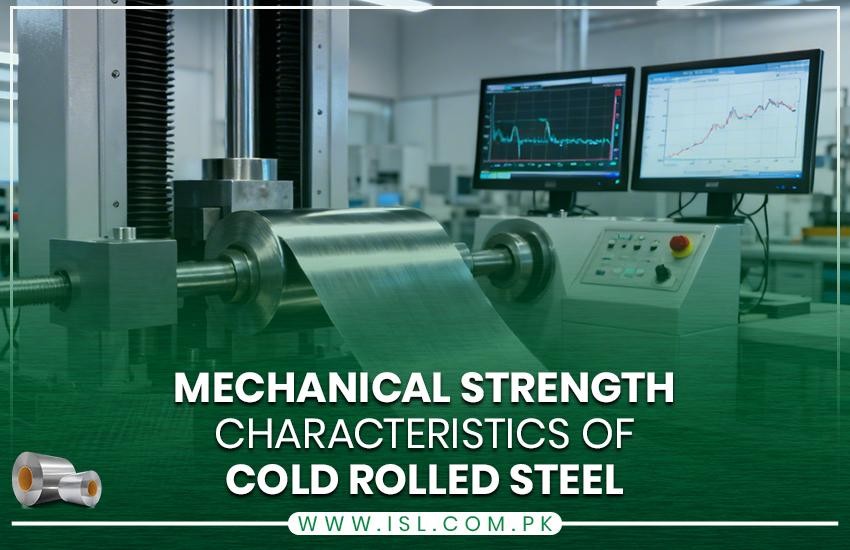
Mechanical Strength Characteristics of Cold-Rolled Steel
The mechanical profile of the steel is verified through rigorous Tensile Testing and Hardness Testing under the stresses of fabrication and end-use.
Yield Strength, Tensile Strength, and Elongation
These three metrics define the “formability window” of the steel.
- Yield Strength: The stress level at which the steel enters the plastic deformation zone.
- Tensile Strength: The maximum stress the material can withstand before necking.
- Elongation: A percentage measurement of ductility.
Strength Grades and Their Industrial Uses
Steel is categorized into grades based on its chemical composition and mechanical properties:
- SPCC Commercial Quality: Yield strength typically < 280 MPa; used for basic bending, forming, and general fabrication.
- SPCD Aluminum Killed Drawing Quality: Optimized for non-aging characteristics and improved drawability, designed for deep-drawn parts like oil pans and complex appliance shells.
- SPCE/SPCF Deep Drawing Quality: Engineered for even higher ductility and sophisticated forming requirements where SPCD might reach its limit.
- HSLA High-Strength Low-Alloy: Micro-alloyed with elements like Niobium or Titanium to achieve high yield strength (up to 340-450 MPa) while maintaining weldability for structural components.
Surface Finishes in Cold Rolled Steel
Surface topography is critical for engineers who perform subsequent painting, plating, or coating.
Bright Finish vs. Matte Finish
The “Skin Pass” mill uses specifically prepared work rolls to transfer the final surface texture to the steel strip.
- Bright Finish (Ra < 0.4 µm): Achieved with smooth, ground rolls. Vital for decorative chrome plating or high-reflectivity applications.
- Dull Finish (Ra 0.6 to 1.2 µm): Achieved with Shot Blast (SBT) or Electron Beam Textured (EBT) rolls. Ideal for applications requiring enhanced paint adhesion and improved lubricant retention during forming.
Surface Roughness and Its Importance
Surface roughness (Ra) is the measure of the fine irregularities on the steel surface. Proper Ra control is vital for managing friction during the stamping process and ensuring an even finish after painting.
- Lubricant Retention: The “peaks and valleys” of a dull finish act as micro-reservoirs for lubricants during stamping, reducing friction and heat generation.
- Galling Prevention: A consistent Ra coating prevents the steel from “sticking” to the die surface, extending the lifespan of the tooling and improving the surface quality of the finished part.
Typical Industrial Applications of Cold-Rolled Steel
Cold rolled steel (CRS) is the backbone of industries where precision, strength-to-weight ratio, and aesthetic appeal are non-negotiable. Hot rolled steel handles the “heavy lifting” of structural frames. On the other hand, CRS is found in the components people actually see and touch.
Here are the primary industrial sectors that rely on cold rolled steel.
Automotive Manufacturing
The automotive industry is the largest consumer of CRS. Because the material is thin yet strong, it allows manufacturers to reduce vehicle weight without sacrificing safety.
- Motorbikes & Tractors: CRS is widely used in the manufacturing of fuel tanks, mudguards, and specialized body panels for motorcycles and agricultural tractors.
- Structural Components: Seat frames, brackets, and reinforced pillars benefit from the high yield strength achieved through work hardening.
- Exhaust Systems: Precision-rolled CRS is frequently aluminized or coated for use in durable exhaust tubing.
Appliances and White Goods
If you look at a refrigerator, washing machine, or dryer, you are likely looking at cold rolled steel.
- Casings and Wrappers: The smooth surface is perfect for powder coating or porcelain enameling.
- Internal Parts: Precision tolerances ensure that moving parts like drum supports in a dryer fit perfectly every time.
Tin-Mill Black Plate & Food Packaging
Tin-Mill Black Plate (TMBP) is a specialized cold-rolled product used as the base material in tin (food tins) manufacturing. Its exceptional surface cleanliness, tight thickness tolerances, and consistent mechanical properties make it ideal for high-speed can-making lines where reliability and food-safety compliance are critical.
Electrical and Electronics
In electronics and power generation, CRS is used primarily for protection and heat management.
- Enclosures: Computer server racks, control panels, and junction boxes utilize CRS for its flatness and ability to be easily punched or laser-cut.
- Shielding: It provides excellent EMI (Electromagnetic Interference) shielding for sensitive components.
- Electric Motors: Non-Grain Oriented Electrical Steel (NGOES) is used in the cores of electric motors and generators, where its uniform magnetic properties in all directions ensure maximum energy efficiency.
Furniture and Hardware
CRS is the standard for modern metal furniture and high-end hardware.
- Office Furniture: Filing cabinets, desks, and lockers require the sharp, clean corners and flat surfaces that only cold rolling can provide.
- Hardware: Drawer slides, hinges, and brackets rely on the consistent thickness of CRS to ensure smooth mechanical movement.
Construction and Infrastructure
While traditional heavy structures rely on hot-rolled skeletons, modern PEBs and LGS systems utilize cold-rolled steel for the entire structural assembly.
- Steel Studs and Joists: Lightweight framing for interior walls and partitions is cold-formed from galvanized CRS, offering precision fit and ease of installation.
- Metal Roofing: Often galvanized or Galvalume-coated cold rolled steel, prized for its durability and uniform appearance.
- Weather-Resistant Steel (Corten Steel): A specialized cold rolled product that forms a stable, protective oxide layer when exposed to the elements, eliminating the need for painting and making it ideal for facades, bridges, train bogies, and outdoor structures.
Aerospace and Defense
In these high-stakes industries, specialized grades of cold rolled steel are used for:
- Fasteners: High-strength bolts and rivets.
- Instrument Panels: Where weight and precision dimensions are vital for cockpit layout.
Sector Comparison: Hot Rolled vs. Cold Rolled
| Application | Material Choice | Why? |
|---|---|---|
| I-Beams & Rail Tracks | Hot Rolled | Large dimensions; tolerances are less critical. |
| Car Structural Parts | Cold Rolled | High yield strength from work hardening; precise gauge control for automated welding. |
| Agricultural Equipment | Mixed | Frames are Hot Rolled; operator cabs are Cold Rolled. |
| High-End Shelving | Cold Rolled | Needs to be flat and easy to powder coat. |

Partner with the Cold Rolled Steel Experts at International Steels Limited
When manufacturing performance depends on tight tolerances, reliable strength, and surface consistency, cold rolled steel becomes a strategic material choice.
For manufacturers looking for a reliable, technically advanced production partner, International Steels Limited provides the domestic expertise and global standards necessary to secure your supply chain.
By partnering with International Steels Limited for your cold-rolled metal requirements, you benefit from our:
- 1. World-class substrate
- 2. Product quality and availability
- 3. World-renowned technology
Contact us today to find the perfect grade for your next project.
Frequently Asked Questions
What is another name for cold-rolled steel?
Cold-formed steel (CFS) is the typical term for steel products when referring to shapes, or CRC for cold-rolled coils, indicating it has undergone further processing at room temperature to increase strength and achieve a smoother, more precise finish.
What is cold-rolled steel vs stainless steel?
Cold-rolled steel starts as regular steel before it’s heated and rolled through powerful machines to make it thinner and smoother. While it lacks the durability of stainless steel, it’s more affordable and easier to work with.
What are the four types of steel?
- 1. Carbon steels
- 2. Alloy steels
- 3. Stainless steels
- 4. Tool steels
Is cold-rolled steel rust-proof?
While cold-rolled steel is not highly corrosion-resistant, it is often galvanized or coated to enhance its durability.
References
Berlin Metals. (n.d.). Cold rolled steel: Surface finishes. https://www.berlinmetals.com/cold-rolled-steel
Japanese Industrial Standards. (2011). JIS G 3141: Cold-reduced carbon steel sheets and strip. https://www.modiranahan.com/uploads/pdf/JIS-G-3141-2011.pdf
JFE Steel Corporation. (n.d.). Cold rolled steel sheet. https://www.jfe-steel.co.jp/en/products/sheets/catalog/b1e-002.pdf
JSW Cold Rolled Steel. (n.d.). Thickness tolerances as per EN10131:2006. https://www.jswcoldrolledsteel.in/uploads/pdf/thickness-tolerances-en.pdf
TubeSolution. (n.d.). JIS G 3141: Cold-reduced carbon steel sheets and strip. https://tubesolution.com/standard/JIS/JIS%20G3141.pdf